You can fill a drawer with safety gear and still have the wrong protection for the job in front of you. Start with what the task could throw, release, or expose you to, then use the tool manual and the protective equipment instructions to make a specific choice.
This guide gives you a way to read those instructions and spot unanswered questions before you start an ordinary home workshop project. It does not select a respirator for an unknown substance or turn a home setup into an approved workplace protection program.
Describe the job before you shop
Write down the material, the operation, and where you will work in one sentence. “Cut a new, unfinished pine board on the patio” gives you a much clearer starting point than “do some woodworking.”
Next, look at the operation from the position your head will occupy. A chip traveling sideways, debris falling from overhead, and a liquid splashing upward create different questions even when the same bench is involved.
Your material description matters just as much as the tool name. A new piece of lumber with a known label is a different planning problem from an old painted cabinet with an unknown coating.
Keep a short unknowns list beside the task description. If you cannot identify a coating or explain how you will control the dust, leave that question open and resolve it before choosing equipment or starting work.
Make the work produce less exposure
NIOSH places respiratory protection behind more effective hazard controls. That is a useful reminder to ask whether you can avoid the operation, choose a less dusty method, or use suitable collection before relying on something you wear.
For a small project, your first improvement might be having the supplier cut a board to size. That changes the work you need to organize at home, although you still need to assess the tasks that remain.
Sketch where the operator, bystanders, material, and collection equipment will go. If your drawing puts someone in the debris path or leaves no room for the hose, change the arrangement while it is still a pencil drawing.
Do not use a protective product to close a question that belongs to the job itself. Unknown insulation, suspect old finishes, and unfamiliar chemical mixtures call for identification and appropriate professional advice before you disturb them.

Read the eye protection label as a set of limits
NIOSH’s eyewear guidance explains that the choice depends on the hazard, work position, other equipment, and your vision needs. It identifies Z87+ with impact protection, rather than treating every pair of clear lenses as equivalent.
Look up the exact model’s markings in the maker’s instructions instead of decoding an unfamiliar symbol from memory. Record the model and the intended hazard on your task note so the label still means something after you discard the packaging.
Imagine that you already own impact-rated glasses and are considering a job involving a splash hazard. The useful question is whether the maker documents that particular protection, not whether the glasses look sturdy enough.
If you need prescription correction, include that in your selection from the beginning. You want a documented arrangement that lets you see the work clearly and use the rest of your equipment as intended.
Check the view you need for the actual task while the tool is stopped. Reading a straight-on label at the store does not tell you whether your view becomes blocked when you bend to mark a board or look toward a workpiece.
Treat the hearing rating as selection information
NIOSH explains that the noise reduction rating on a package may differ from the protection an individual receives. Correct fit and consistent use matter, and individual fit testing is the best way to check the reduction for a wearer.
Do not subtract a package number from an assumed tool noise level and declare the result safe. You would be combining an unknown exposure with a rating that may not describe your fit.
Compare the fitting instructions for the options you are considering. A product that you can correctly use for your task is more useful than one you repeatedly loosen because you never resolved how it should sit.
Ordinary music headphones and active noise cancellation are not automatically hearing protection. NIOSH says noise-canceling products should not be considered hearing protectors unless they are labeled with an NRR.
Plan how you will communicate before the noisy work begins. For example, you can agree that anyone needing your attention will wait until the tool stops and you have set the work down, instead of interrupting you mid-cut.
Separate respirator selection from a seal check
The same NIOSH selection page says to follow the manufacturer’s donning, storage, and maintenance instructions and perform a user seal check each time you put on a tight-fitting respirator. A seal check does not choose the correct protection for the substance.
Keep three questions separate on your note: what is in the air, which documented configuration addresses it, and whether that configuration fits you. Answering the last question does not answer the first two.
Do not treat a particulate designation as a blanket answer for fumes, vapors, or an unidentified material. If the instructions and hazard information do not support your intended use, stop and get qualified selection advice.
Save the full instructions with the exact model information, including any replacement components you plan to use. A shopping page that names a product family is less useful at your bench than the instructions for the configuration you actually own.
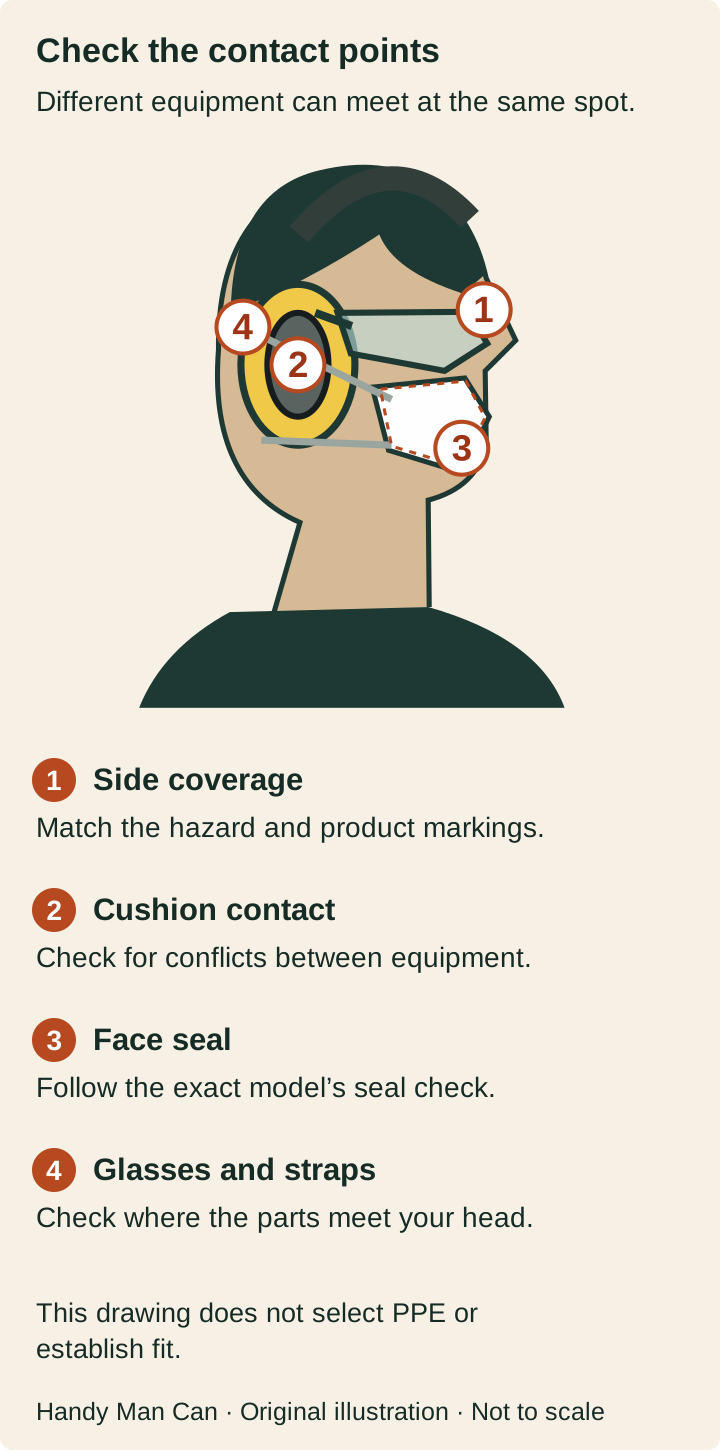
Check the whole combination with the tool stopped
Put on the equipment in the order given by the relevant makers, then inspect the combination. NIOSH notes that hearing protectors can interfere with glasses, respirators, and other equipment worn on the head.
Use a mirror or ask someone to help you observe what is happening as you turn your head. You are looking for a reason to revisit the instructions, not conducting a homemade certification test.
For example, a different pair of glasses may change where an earmuff cushion meets your head. Record that conflict and find a compatible option instead of forcing the pieces together or trimming them yourself.
Give your task note four final entries: the equipment models, the instructions you checked, any unresolved questions, and your stop point. That turns a vague intention to “wear protection” into a decision you can revisit before the next project.
Try the note on a small planning example
Suppose you plan to shorten a new shelf board and assemble a small organizer afterward. Give those operations separate lines, because the cutting step and the hand-tool assembly step do not necessarily present the same exposure questions.
Beside the cutting line, record the tool manual, the material description, and the controls you intend to use. Beside the assembly line, record the remaining questions without copying every item from the cutting list automatically.
Now imagine replacing the new board with salvaged painted material of unknown age. Your original note no longer describes the job, so identify the material and revise the work plan before you decide whether your existing equipment is suitable.
Keep this example as a planning habit rather than a fixed PPE shopping list. Its value is that it makes a change visible while you can still choose a different method or seek help.
Know when to pause and reset
Set the tool down and stop the task if your chosen arrangement shifts, becomes uncomfortable enough that you want to remove it, or stops letting you see the work. Work out the cause in a clean, quiet place before continuing.
Revisit your selection whenever the material, operation, or workspace changes. Keeping a readable note and the original instructions takes little storage space, and it gives you a much better starting point than trusting whichever gear happens to be closest.