Give every socket a place you can recognize
A socket organizer is useful when it helps you spot both the size you need and the tool that hasn’t returned. The best style for a small collection depends on your drive sizes, shallow and deep sockets, drawer clearance, and how often you carry the set away from the bench.
This research-based comparison covers an Ernst 8450 Socket Boss, the inspected Olsa Tools blue metric magnetic three-piece selection, and OEMTOOLS 22233 six-piece SAE-and-metric trays. They represent adjustable clips, magnetic fixed positions, and labeled posts rather than three copies of one storage idea.
Choose the Ernst when you want movable clip positions, examine the Olsa metric selection when its fixed size layout matches your sockets, or consider the OEMTOOLS trays when you need separate SAE and metric post layouts. We haven’t performed retention, drop, or drawer-fit tests on these products.

Count drive size and fastener size separately
A socket has a square drive connection and an opening that fits a particular fastener size. A 3/8-inch-drive socket can have a metric opening, so sorting everything under a single label such as metric doesn’t tell you which drive clips or trays you need.
Lay out the collection by drive size first, then separate SAE and metric openings and shallow and deep forms. Note adapters, extensions, spark-plug sockets, and unusually wide impact sockets because they can need separate space or different storage.
Keep duplicates visible in your inventory instead of assuming the organizer needs only one position per size. Two sockets with the same opening can have different depths or profiles, and a fixed tray can run out of the position you need while leaving other labels empty.
| Exact selection | Useful distinction | Check before buying |
|---|---|---|
| Ernst 8450 Socket Boss | Red 18-inch three-rail, 57 clips, 1/4-, 3/8-, 1/2-inch drives; not 8411 | Match your work, current selected package and exact instructions; no hands-on performance claim. |
| Olsa magnetic metric kit | Selected three-piece blue METRIC 1/4-, 3/8-, 1/2-inch kit; listing title/lower bullet inconsistency disclosed, not SAE and not impact compatible | Match your work, current selected package and exact instructions; no hands-on performance claim. |
| OEMTOOLS 22233 six-tray set | Selected black/green six-piece SAE and metric trays for three drive sizes | Match your work, current selected package and exact instructions; no hands-on performance claim. |
Ernst 8450 Socket Boss: adjustable clips on three rails

The selected Ernst 8450 is the red 18-inch, three-rail Socket Boss with 57 twist-lock clips covering 1/4-, 3/8-, and 1/2-inch drives. The current maker category and inspected Amazon listing agree on that specific three-rail configuration.
Consider it when your collection doesn’t follow a neat run of every size or you want to arrange sockets in a personal order. Movable clips let you allocate space around the actual socket bodies, provided the rail length and clip quantities suit the assortment.
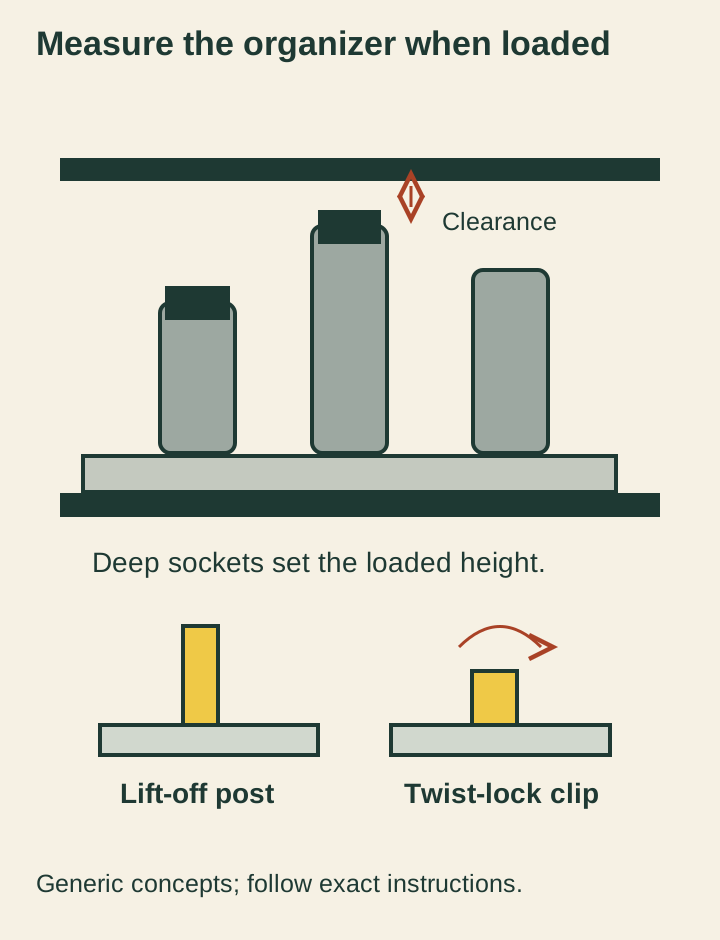
The twist-lock arrangement is a different handling step from simply lifting a socket off a post. Try the documented removal and return sequence with a few representative sockets before loading the entire tray, especially if you normally work with one hand occupied.
Don’t mistake a clip count for a promise that 57 of your widest sockets will fit side by side. Socket outside diameter, clip spacing, drive mix, and any accessories you want to carry determine the usable arrangement for your own set.
Olsa Tools magnetic selection: fixed metric positions

The inspected Olsa Amazon page had the blue metric three-piece selection active, covering 1/4-, 3/8-, and 1/2-inch drives. The page title and some lower description text did not describe the selection consistently, which makes checking the visible selected options especially important here.
Consider that configuration when your metric sockets match its size positions and you want a two-row magnetic layout. This recommendation is limited to the inspected blue metric kit, rather than the SAE, single-drive, or other color packages available through related options.
The listing excludes impact-socket compatibility for this arrangement, so don’t assume a black socket will fit because its fastener size appears on the organizer. Compare the complete size chart and shape limits with your actual sockets before ordering.
We haven’t tested magnetic retention, and a magnet doesn’t replace checking drawer fit or keeping tools secured during transport. Follow the product instructions for placement and handling, then make a controlled check of the actual sockets you intend to store.
OEMTOOLS 22233: six labeled trays for two systems

The OEMTOOLS 22233 selection is the black-and-green six-piece set with separate SAE and metric trays for three drive sizes. The inspected listing describes labeled posts and positions for shallow and deep sockets, giving you a more prescriptive layout than adjustable rail clips.
Consider it when you like each size having an obvious home and want the measurement systems kept apart. Empty labeled positions can help you notice what is absent, but they may also represent sizes you don’t own and have no reason to buy.
The tallest listed peg is 3.9 inches, making vertical clearance a particular concern before the sockets are even added. Measure your actual drawer opening and loaded socket height rather than assuming a tray sold for toolboxes will fit every shallow drawer.
The posts organize rather than latch the sockets in place like a twist-lock clip. Don’t treat a tray that works well sitting in a drawer as automatically suitable for carrying at an angle or hanging with sockets loaded unless the exact instructions support it.
Measure the loaded organizer, not just the base
Measure the usable drawer floor, the opening beneath the frame, and any obstruction along the slide path. The interior may be taller at the back than the opening you have to move the loaded organizer through.
Allow space to grip and remove the sockets without scraping your knuckles or catching the drawer above. An organizer that technically fits can still be frustrating if the tallest deep socket has to lean sideways every time you close the drawer.
For a portable box, also check how the organizer behaves when you lift, carry, and set down the box in its intended orientation. Don’t create an untested transport arrangement by assuming a magnet, post, or clip is a universal retention system.
Choose flexible positions or fixed size labels deliberately
Adjustable rail clips work well as a storage concept when your collection contains gaps, duplicates, or unusual combinations. You’ll need to label the positions yourself if quickly spotting a missing size matters more than simply keeping the sockets in order.
Fixed trays provide that size sequence, but their labels and spacing become constraints as well as conveniences. A socket can have the right opening and still differ in body diameter, length, or construction enough to require a separate location.
If you mainly use a compact case that already holds the original socket set well, keep it until you have a clear reason to change. An organizer should solve a missing-tool or access problem, rather than turn a useful case into loose pieces without a better home.
Reserve separate homes for extensions and adapters
A rail or tray filled with sockets doesn’t necessarily account for the rest of the working kit. Plan nearby storage for the ratchet, extensions, adapters, and any specialty sockets you need for the same job.
You can group those items by task while keeping drive sizes clearly identified. For example, a small removable kit can hold the sockets and extension for one repeated maintenance job, while the larger collection stays organized in the drawer.
Avoid using an adapter as a permanent placeholder just because it fits an empty clip. You want the stored arrangement to make the next selection clearer, including whether the actual tool and accessory are suitable for the operation you plan.
Buy for the collection you have now
Choose the Ernst 8450 for a verified three-drive clip configuration when adjustable placement answers your inventory. Choose the inspected Olsa blue metric kit only after confirming its selected variant and socket compatibility, or the OEMTOOLS 22233 when its labeled six-tray layout and height fit your storage.
Before checkout, match the model, number of pieces, drive sizes, and measurement system on the current listing. Similar product photos can hide a single tray, different clip quantity, or SAE version that won’t solve the problem you just measured.
Load a few representative sockets first and check access, clearance, and the instructed retention method before committing the whole collection. A useful organizer makes the next job easier to start and easier to finish with every socket accounted for.